Interview by Kelly Postiglione. Photos provided by Bea Olive Oil.
Meet Beatrice Karp, the founder of Bea Olive Oil, a brand bringing fresh, small-batch olive oil straight from family-run groves in Tuscany to the U.S. With a background in cybersecurity and a deep curiosity about how things are made, she took an unexpected path, trading tech for time spent harvesting olives across Italy. What started as a personal exploration quickly turned into a mission: connect incredible farmers with a market that values quality, transparency, and freshness.
Where are you from, and where do you live now?
I’m from Larchmont, New York, and I currently live in the West Village in New York City.
Can you tell us a little about your educational and professional background?
I studied Science, Technology, and Society at the University of Pennsylvania (C’22), where I became interested in understanding why we build what we build. Alongside that, I pursued a minor in Engineering Entrepreneurship, splitting my time between technical coursework and Wharton classes focused on how high-tech ventures come to life. I also studied Buddhism.
During my freshman year, I thought I wanted to join the Navy and trained in ROTC. Professionally, I worked in cybersecurity, first through internships in ethical hacking and fraud detection in the payment industry, and later in a full-time role focused on cloud security. That experience shaped how I think today, though I’ve become more interested in a different kind of system, one that is physical and deeply human.
How did you first get involved with olive oil and farming in Tuscany?
After graduating from university, I deferred my job for a year to travel alone. At the time, I was preoccupied with a set of questions about how we experience the world, whether it was possible to encounter reality sans our psyche’s filter of words, and to connect more directly to what is. I referred to this as “ultimate truth.”
I decided agriculture would be the most fitting setting to explore those questions, something physical and grounded in reality. Through a family friend, I went to live on a vineyard and olive grove estate in Tuscany for the summer, helping with tastings. I became close with people in the surrounding village, and they encouraged me to return for the olive harvest.
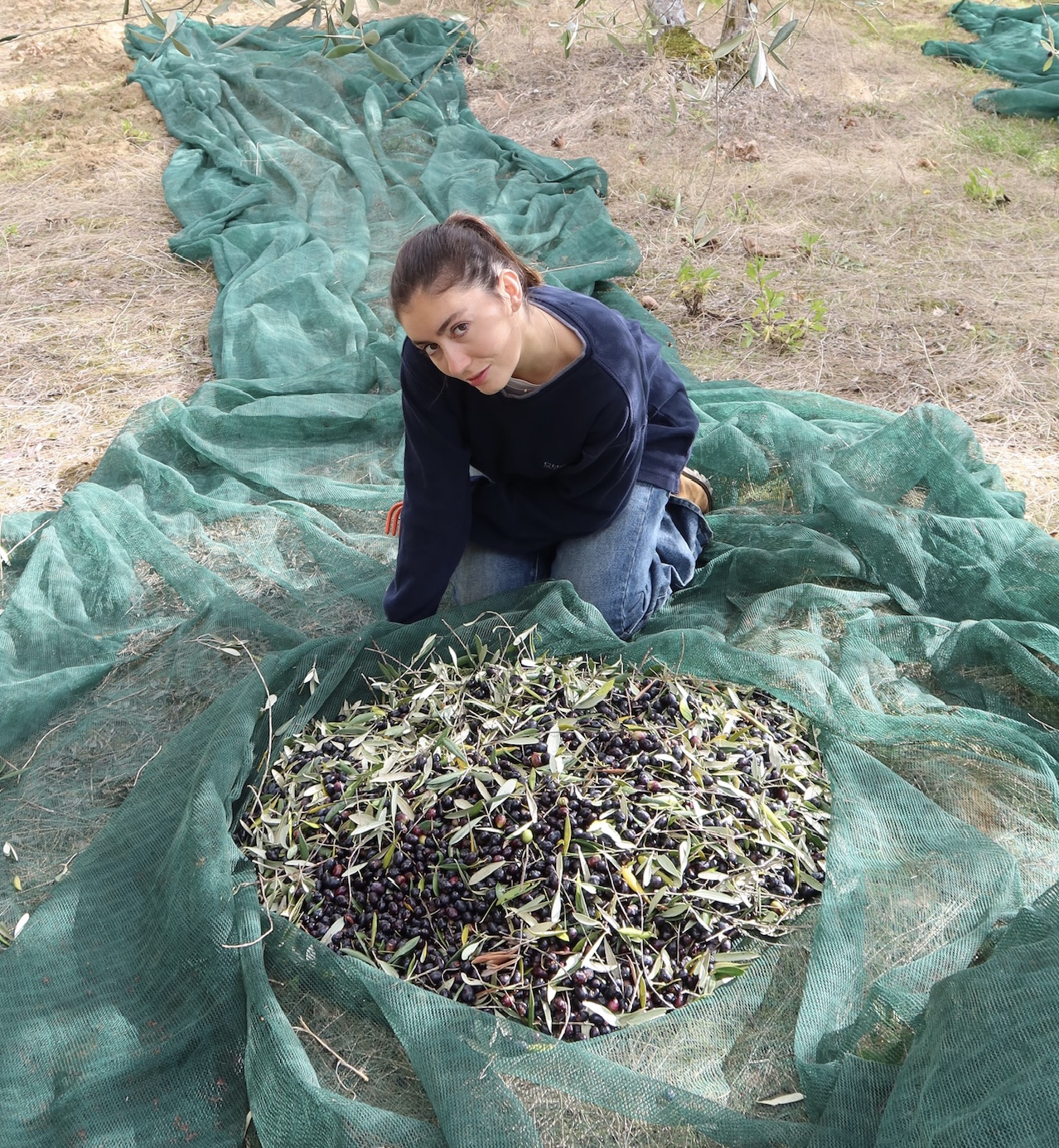
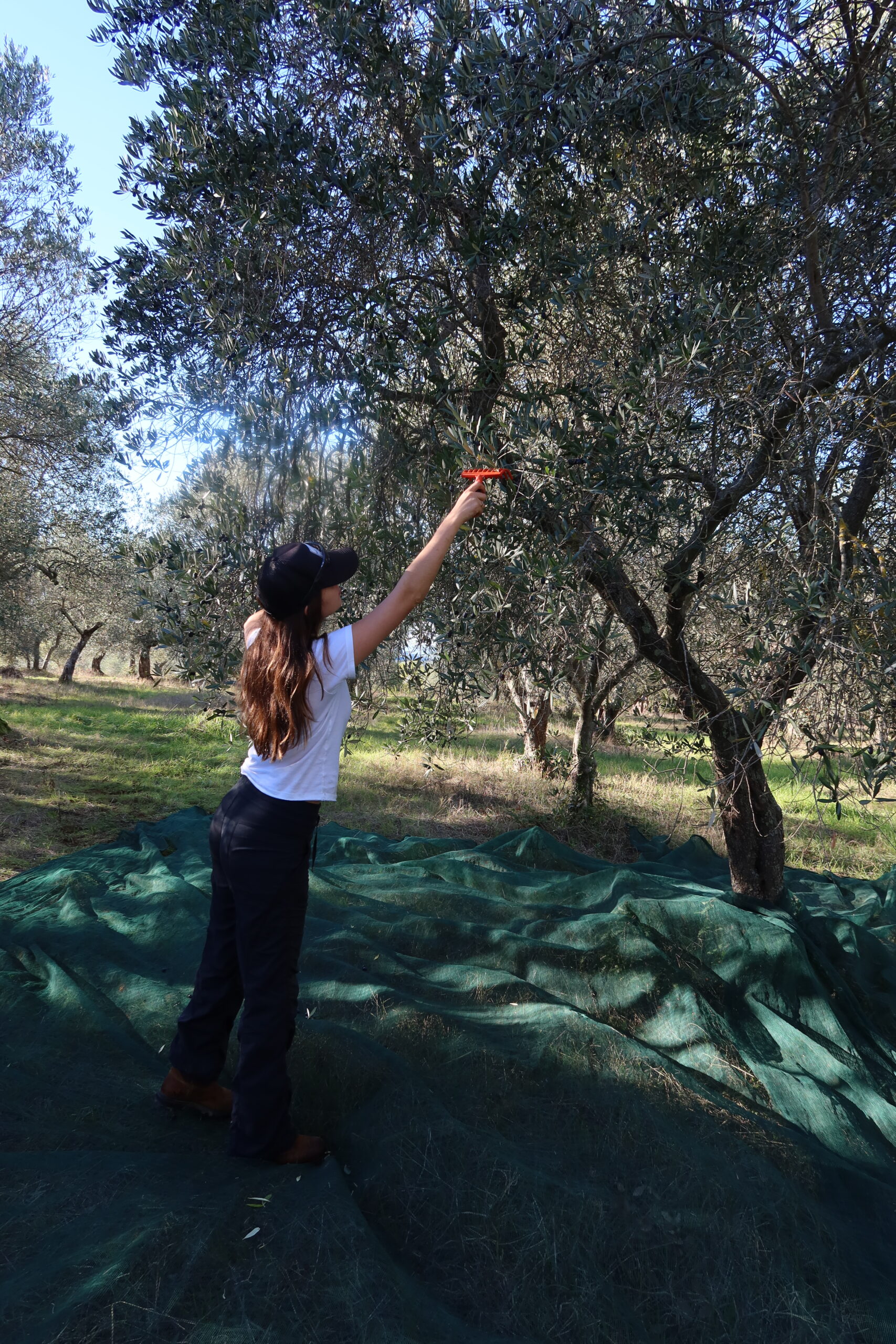
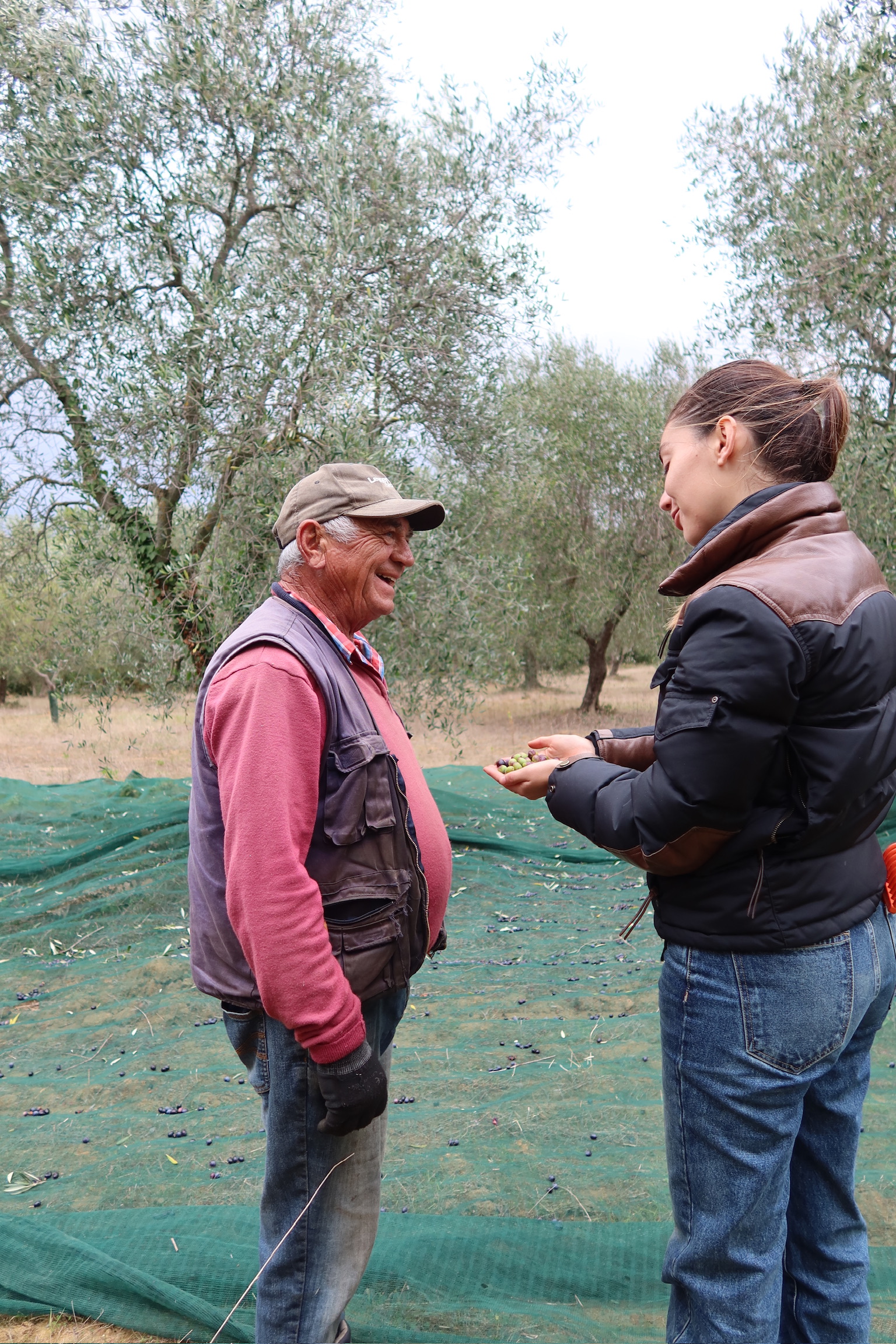
I spent months traveling through Italy and working as an olive picker, moving between farms, often living in vans in the olive groves or in people’s barns. I learned how olive oil is made when there is a true obsession with quality. Many of the families I met produced beautiful oil primarily for their own use, and often had some surplus they would have liked to sell.
Everyone in the village was making the same oil, but they lacked the infrastructure, resources, or access to markets beyond their immediate communities to send it to a city like Florence, never mind the States. In many cases, this was contributing to a larger issue across Italy: groves being abandoned because they were no longer economically viable to maintain, and families ceasing to cultivate their land as younger people urbanized.
At the same time, I was beginning to understand the other side of the market; why olive oil is one of the most counterfeited foods in the world, particularly in the U.S., where it’s estimated that 80% of what’s on the shelf is mislabeled or adulterated.
What inspired you to start Bea Olive Oil?
Bearing witness to two realities at once: incredible oil that couldn’t find a market, and a market full of compromised oil. At the time, I was not in the headspace to think about starting a company, but when I learned about how these families who work so hard to make the oil couldn’t sell it, and the counterfeit oil we are eating in the USA, I thought to myself, “That’s dumb”. It sparked conversations, and the farmers noticed my curiosity, so they took me to see the many abandoned groves, told me all about their wasted fields, and called up their nonna, saying, “An American is thinking of bringing your oil to America!!!” It definitely felt energetic.
The first time I witnessed the neon green color of fresh olive oil, I felt I was experiencing ultimate truth, something true without debate. Olive oil is honest; you either make it well or you don’t, and it’s obvious in the flavor. It’s a high technical process rooted in intuition and attunement; I enjoy that duality. What really made starting the company obvious was an experience I had in Hawaii. The second half of that year off, I interned for an entrepreneur on the island of Kauai, who taught me that starting a business is code for adventure and making the world more beautiful. When I started the company, I approached it more like a project; I didn’t really have thoughts of success or failure in mind. I just knew I wanted to be over there for the harvest; I wanted this oil, and so did my family. So on the one hand, it felt casual. But then again, I also felt my life would not feel complete unless I went for this.
What makes your olive oil different from what people usually find in stores?
Olive oil today is no different from disciplines like fashion or the broader food industry. It’s mass-marketed, optimized for shelf life and margin, and corners are cut at scale to make it into stores. But olive oil doesn’t behave like a shelf-stable product; it behaves like a fresh fruit juice.
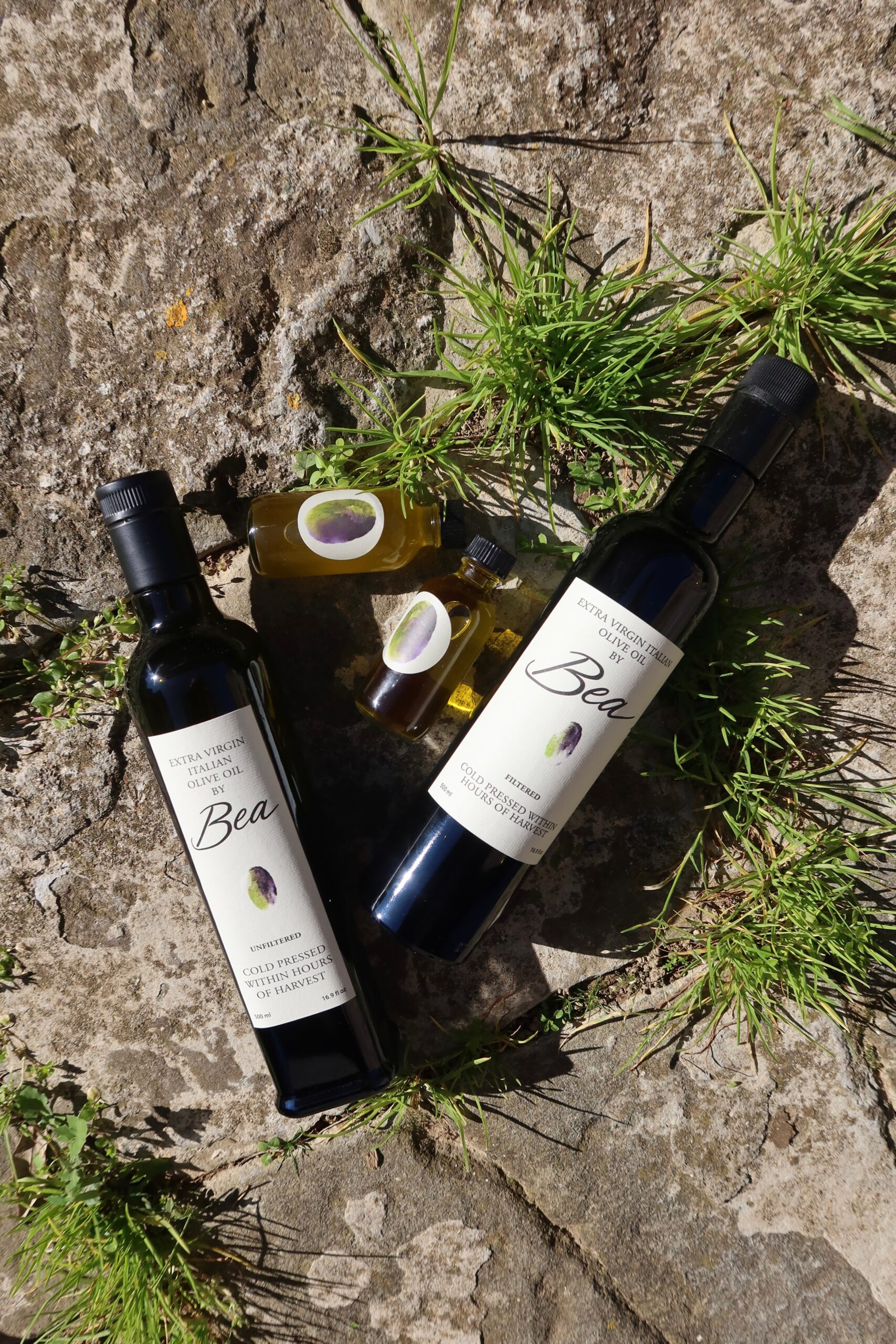
The most important factor is timing. Olive oil is the opposite of wine. Wine evolves and improves with age; olive oil degrades. If you want it to have real nutritional value, not just be “fat”, it needs to be fresh; the polyphenols, which are the antioxidants inside the oil, need to be alive. Bea Olive Oil has a two-week turnaround time, meaning that from the time the olive is taken off the branch, my customers can receive their bottles two weeks later, fresh from the harvest. This is when I do most of my sales, from people who want authentic, fresh oil straight from the grove. We ship overnight air to make that possible, which makes a huge difference when most olive oils sit on a boat for weeks or months. We’re inviting people to consume olive oil the way it’s actually experienced in producing regions: fresh, on the rhythm of the harvest. We will never sell oil that’s more than one year old because by then we are sold out and a new harvest exists. In contrast, most olive oil in U.S. stores takes up to two years just to reach the shelf, and it’s not uncommon for bottles to be 2–6 years old. At that point, it’s no longer alive; it’s lost both flavor and nutritional value, anti-cancer properties, etc. Even if it’s labeled organic or extra virgin, it’s just too old to offer anything good.
We harvest early in the season, at the precise moment when the olives are ripe but still rich in polyphenols, the compounds responsible for both the peppery flavor and the oil’s health benefits. This is a deliberate trade-off between quantity and quality. Larger-scale producers often harvest later, when the olives yield more oil, but at the cost of flavor and nutritional value.
Our olives are hand-picked or gathered using gentle tools to avoid bruising, which can accelerate oxidation. In contrast, large-scale operations often prioritize speed and efficiency, increasing the risk of damage to the fruit.
Once harvested, the olives are pressed within hours. The moment an olive leaves the tree, it begins to degrade, so timing is critical, though this level of care is both costly and inefficient at scale.
We work with small, private frantoios that accept only a limited number of trusted producers. This ensures that our olives are never mixed with lower-quality batches and allows for full control over each pressing. The machinery is thoroughly cleaned between runs to maintain purity.
We use a two-phase extraction system that relies solely on the olive’s natural moisture, meaning nothing is added or diluted. After pressing, the oil is stored in stainless steel tanks to protect it from light, heat, and oxygen, and is finally bottled in dark glass with a non-removable cap to preserve its integrity.
All of these decisions..where we grow, how we harvest, how quickly we press, how we store, and how we ship..are about protecting something very fragile. I’m not trying to make a “better-for-you” olive oil or a slightly cleaner version of what already exists. I’m trying to offer the best possible olive oil.
We’re incredibly grateful for our amazing community and the wonderful people and places that make it so special. Explore our Blog page for features that spotlight local businesses and more. Looking for something to do in Westchester? Check out our Local Guides and Calendar pages to discover what’s happening locally and follow along on Instagram for more!